



NY Attorney For Slip and Fall Cases
A slip and fall in your apartment building can change your life in an instant. One moment you’re walking down a familiar
hallway or climbing a poorly lit staircase, the next, you’ve lost your footing. What follows can mean serious injuries,
mounting medical bills, and weeks away from work.
If you were injured due to unsafe conditions in your New York apartment building, you have legal rights. New York premises liability law holds landlords accountable for negligence and protects both tenant and their guests.
You should not have to pay the price for someone else’s negligence.
This guide explains how slip and fall accidents in apartment buildings happen, who bears the legal responsibility, and how you can recover the compensation you need to heal. Contact our Queens slip and fall lawyer near you.

Common Areas for Slip and Fall Accidents in Apartment Buildings
A slip-and-fall accident is a type of premises liability incident that occurs when a person loses their footing due to a dangerous condition on someone else’s property.
These accidents often occur in common areas of apartment buildings, including:
- Hallways
- Lobbies
- Stairwells
- Exterior walkways
- Entryways
- Parking areas
- Vestibules
These spaces can present significant safety risks when they are not properly maintained. Even minor hazards may lead to serious injuries if property owners or managers fail to address dangerous conditions promptly.
According to the Centers for Disease Control and Prevention, falls are among the leading causes of injury among adults aged 65 and older.
However, falls are not always the result of simple missteps or loss of balance. In some cases, hazardous property conditions, such as wet floors, broken walkways, inadequate lighting, or accumulated debris, may contribute to an accident.
For example, a landlord who fails to address a leaking pipe or leaves debris on a damaged walkway may create a dangerous condition. When someone is injured because of such a condition, the circumstances may support a premises liability claim, depending on the facts of the case and applicable law.
Common Causes of Slip and Fall Accidents in New York Apartment Buildings
Slip and fall accidents in apartment buildings can occur for many reasons. Common hazards include wet floors, poor lighting, damaged walking surfaces, missing handrails, cluttered walkways, or snow or ice accumulation.
Identifying the specific condition that caused a fall is critical in evaluating a potential premises liability claim. Understanding the condition that caused you to fall will determine whether a property owner or manager may have failed to maintain the property in a reasonably safe condition.
Wet or Slippery Floors
Water can create hazardous conditions on many walking surfaces. Apartment building lobbies often experience heavy foot traffic, especially during rainy or snowy weather when residents and visitors track in water, mud, and slush.
Without proper maintenance, entrance mats, warning signs, or regular cleaning, floors may become slippery and increase the risk of a fall.
Water-related hazards may also develop elsewhere in a building. Leaking pipes, dripping ceilings, overflowing appliances, and malfunctioning radiators can create slippery conditions in hallways, stairwells, and other common areas.
Snow and Ice Accumulation on Sidewalks and Entryways
New York winters often bring snow, ice, and freezing temperatures that can create dangerous walking conditions.
Property owners generally have a duty to maintain sidewalks, entryways, and other areas under their control in a reasonably safe condition. Depending on the circumstances, failing to remove snow or ice within a reasonable period may create hazardous conditions for tenants, visitors, and pedestrians.
Poor Lighting in Hallways, Stairwells, and Parking Areas
Adequate lighting helps people identify and avoid potential hazards. When common areas are poorly lit, it may become more difficult to see uneven surfaces, obstacles, spills, or other dangerous conditions.
Burned-out light fixtures, dim lighting, or poorly maintained parking areas may increase the risk of trips and falls by making hazards less visible.
Damaged or Uneven Walking Surfaces
Walking surfaces naturally deteriorate over time. Sidewalks may crack or become uneven due to weather conditions, while staircases may develop loose tiles, broken steps, or worn surfaces.
When these conditions are not repaired, they may create tripping hazards for residents and visitors. Even relatively small defects can cause a person to lose their balance and suffer significant injuries.
Missing or Broken Handrails
Handrails play an important role in helping people maintain balance while using stairs, ramps, and elevated walkways.
Building codes and safety regulations establish requirements regarding the installation and maintenance of handrails in certain locations. A damaged, loose, or missing handrail may increase the risk of injury if someone slips or loses their balance.
Cluttered Walkways and Entryways
Common areas should generally remain free from unnecessary obstructions that could interfere with safe pedestrian travel.
Maintenance equipment, cleaning supplies, boxes, garbage bags, personal belongings, or other items left in hallways and entryways can create unexpected tripping hazards. When walkways become obstructed, residents and visitors may be forced to navigate around obstacles, increasing the risk of a fall.
As such, unclear and poorly maintained common areas pose the biggest risk for injuries to its residents.
Establishing Liability for Slip and Fall Accidents in New York Apartment Buildings
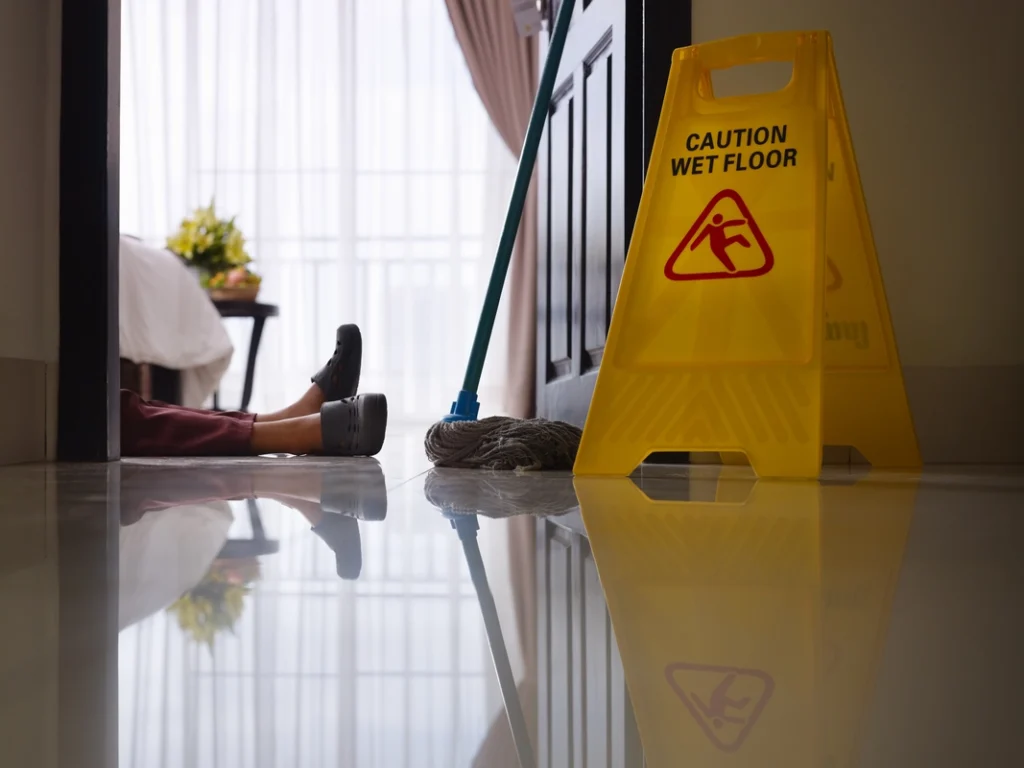
Liability for a slip and fall accident in an apartment building is often determined by identifying who owned, occupied, controlled, or maintained the area where the accident occurred and whether that party owed a duty of care to the injured person.
Determining who may be legally responsible requires a careful review of the facts, including the roles of property owners, management companies, maintenance contractors, and any other parties responsible for maintaining the premises. The analysis may also involve examining who had responsibility for the specific area where the accident occurred and whether that party failed to address a dangerous condition within a reasonable period of time.
Under New York Law, Landlords and property owners are primarily responsible for keeping their buildings in a reasonably safe condition by maintaining all common areas in a reasonably safe condition. This legal duty applies to spaces shared by all tenants, including lobbies, vestibules, elevators, shared laundry rooms, and front steps.
Landlords may be held liable for injuries if they create a hazard and/or knew or should have known about a danger and fail to fix it. Whether a landlord knew or should have known about a dangerous condition refers to the type of “notice” the landlord had as to the dangerous condition.
Importantly, landlord liability for a slip and fall is limited to the common areas outside the tenant’s apartment. This means that if a tenant slips and falls due to a dangerous condition, such as water on the apartment’s interior floor, the landlord cannot be held liable.
Additionally, building owners may hire outside companies to handle certain aspects of a property’s day-to-day operations. A property management company may be responsible for tasks such as maintenance requests, cleaning schedules, inspections, and tenant relations.
When a property management company assumes responsibility for maintaining portions of a property, it may be held liable if its negligent acts or omissions contribute to a dangerous condition that causes injury. Determining whether a management company is legally responsible depends on the scope of its duties, the circumstances of the accident, and the specific facts of the case.
New York Landlord Responsibilities:
The following is a non-exhaustive list of property maintenance and safety obligations that may give rise to liability when a landlord fails to fulfill them and a dangerous condition causes injury:
Duty to Maintain Common Areas: Property owners and those responsible for maintaining a property generally have a duty to keep common areas in a reasonably safe condition for lawful visitors, tenants, and others who are legally on the premises. This duty requires them to act as a reasonably prudent person would under similar circumstances.
Depending on the circumstances, this may include inspecting the property, addressing hazardous conditions, and making reasonable repairs to items such as plumbing, lighting, stairways, walkways, and other building components. When a property owner or manager fails to take reasonable steps to address a dangerous condition, and that failure contributes to an injury, they may be held liable under premises liability law.
Regular Inspections and Maintenance: Property owners and landlords are generally expected to take reasonable steps to inspect and maintain areas of the property under their control. Identifying and addressing hazardous conditions before someone is injured can help reduce the risk of accidents and may be part of a property owner’s duty to maintain reasonably safe premises.
Depending on the circumstances, reasonable maintenance may include inspecting common areas, repairing damaged walking surfaces, addressing lighting issues, and correcting other conditions that could create an unreasonable risk of harm. For example, if a landlord becomes aware of a cracked stair, loose carpeting, or another potentially hazardous condition, they may have a duty to take reasonable steps to repair it or otherwise address the danger within a reasonable period of time.
Whether a landlord acted reasonably depends on the specific facts of the case, including the nature of the condition, how long it existed, and whether the landlord knew or should have known about it.
- Compliance with local building codes: property owners in New York are generally required to comply with applicable building codes, housing maintenance requirements, and other safety regulations. For example, the New York City Administrative Code contains provisions requiring owners to maintain their properties in a safe condition and keep certain building components in good repair.
- Violations involving issues such as inadequate lighting, defective stairs, missing handrails, or other unsafe conditions may be relevant evidence in a premises liability case.
- Depending on the circumstances, evidence of a code violation may support an argument that a property owner failed to maintain the premises in a reasonably safe condition. However, whether a violation exists and its legal significance will depend on the specific facts and applicable law.
Five Steps to Take Following a Slip and Fall in Your Apartment Building:
The moments immediately after a fall can be confusing, stressful, and painful. Taking prompt action can help you obtain appropriate medical care, document the circumstances of the accident, and protect your ability to pursue compensation if your injuries were caused by a dangerous property condition.
- Seek Immediate Medical Attention
Your health should be your top priority after a fall. If you believe you may be seriously injured, seek emergency medical care immediately. Even injuries that initially seem minor can become more apparent over time, and some conditions may not cause immediate symptoms.
Prompt medical evaluation can help ensure that injuries are properly diagnosed and treated. Medical records may also help document the nature of your injuries and the timing of your treatment following the accident.
2. Report the Accident to the Landlord or Property Manager
Notify the building owner, property manager, or building superintendent as soon as possible. Memorialize communication in writing via email or a certified letter. Ask them to generate a formal incident report and request a copy for your personal records.
However, avoid signing any documents or accepting any quick settlement offers without first speaking to a slip-and-fall Cohen & Cohen Personal Injury Lawyers.
3. Document the Scene
Conditions at the accident scene can change quickly. Snow and ice may be removed, spills may be cleaned, and damaged conditions may be repaired shortly after an incident occurs.
If you can do so safely, take photographs and videos of the area where you fell. Try to capture the condition that caused the accident, the surrounding area, any warning signs (or lack thereof), lighting conditions, and any other relevant details.
If anyone witnessed the accident, obtain their names and contact information if possible. Witnesses may be able to provide valuable information regarding how the incident occurred.
4. Preserve Evidence
Keep the clothes and shoes you were wearing at the time of the accident. Do not wash them or throw them away. They can help prove the conditions at the scene. So, place them in a safe plastic bag to store them away for your lawyer to review later.
5. Consult a Personal Injury Attorney
Contact an experienced slip and fall lawyer like our Cohen & Cohen Personal Injury Lawyers before you speak to the landlord’s insurance company. Insurance adjusters use tricky tactics to minimize your financial payout or shift the blame onto you. You can find a dedicated personal injury lawyer at Cohen and Cohen Law Group. They handle all communication, gather necessary evidence, and build a strong case on your behalf immediately.
How to Prove Negligence in a Slip and Fall Case
To recover compensation for premises liability cases, an injured person must establish that a property owner, landlord, management company, or other responsible party was negligent and that the negligence caused the injury.
Elements of Negligence
Your legal team must prove four distinct elements to win your legal claim.
- Duty of Care: Your legal team must demonstrate that the defendant owned, occupied, controlled, or maintained the property and owed a duty to keep the premises in a reasonably safe condition.
- Breach of Duty: To establish liability, you generally must show that the defendant created the dangerous condition or knew or should have known about it and failed to take reasonable steps to address the condition. This is often established through evidence of actual or constructive notice.
- Causation: You must demonstrate that the dangerous condition was a substantial factor in causing your injuries. For example, if an icy sidewalk caused a fall that resulted in a broken arm, evidence may be needed to distinguish those injuries from any unrelated or pre-existing medical condition.
- Damages: You must show that the accident resulted in actual losses, such as medical expenses, lost income, pain and suffering, or other compensable damages.
Importance of Evidence
Strong evidence can significantly affect the outcome of a premises liability claim and may help facilitate settlement discussions. Evidence commonly used in slip and fall cases includes maintenance records, inspection reports, repair logs, photographs, surveillance footage, incident reports, witness statements, and medical records.
Building maintenance records and prior complaints are used to establish whether a property owner or manager knew, or should have known, about a hazardous condition. Incident reports may help establish a timeline of events, while surveillance footage may capture the dangerous condition or accident itself.
Without sufficient evidence, liability may become disputed, making it more difficult to establish how the accident occurred and who may be responsible.
What Compensation Can You Recover for a Slip and Fall Injury?

You may be able to recover compensatory damages for a slip and fall injury in New York, including medical expenses, lost wages, and pain and suffering. A serious injury can affect both your financial stability and overall well-being.
In certain circumstances involving especially reckless, willful, or egregious conduct, punitive damages may be available under New York law. Our attorneys evaluate whether the facts of a particular case support claims for punitive damages.
Economic Damages
Economic damages compensate you for the direct financial losses caused by your injury. This may include past and future medical expenses, emergency treatment, physical therapy, surgeries, prescription medications, and lost wages if your injuries prevent you from working. If your injuries permanently affect your ability to return to your prior occupation or reduce your earning potential, you may also seek compensation for diminished future earning capacity.
Non-Economic Damages
Non-economic damages compensate you for the personal, non-financial effects of the accident, including physical pain, emotional distress, mental anguish, and loss of enjoyment of life. Serious injuries, such as fractures or traumatic brain injuries, can have lasting effects far beyond medical bills.
Punitive Damages
Punitive damages are rarely awarded in New York slip and fall cases. However, in limited circumstances involving especially reckless, willful, or egregious misconduct, a court may award punitive damages to punish the wrongdoer and deter similar conduct.
How to Prevent a Slip and Fall in Apartment Buildings
Both landlords and tenants can take practical steps to reduce the risk of slip and fall accidents in apartment buildings.
Property owners should:
- Conduct regular inspections to identify hazardous conditions such as broken flooring, torn carpeting, leaks, poor lighting, or damaged handrails.
- Promptly address snow, ice, and other weather-related hazards in compliance with applicable New York and local laws.
- Replace burned-out lighting in common areas as soon as reasonably possible.
- Use non-slip mats in entryways during wet or snowy weather.
Tenants can also help reduce risks by:
- Keeping personal belongings out of shared hallways and walkways.
- Wear appropriate footwear during icy or wet conditions.
- Reporting dangerous conditions, such as poor lighting, unstable railings, or spills, to building management in writing when possible.
- If in the lobby, report it to management in writing immediately.
How New York Laws Affect Slip and Fall Accidents in Apartment Buildings
New York law imposes important deadlines and procedural requirements for personal injury claims.
In most cases, you generally have three years from the date of the accident to file a lawsuit against a private property owner. Missing that deadline may prevent you from pursuing compensation.
Different rules may apply if the property is owned by a public entity, such as the New York Housing Authority (NYCHA). Claims against public entities typically require a Notice of Claim within 90 days of the accident, followed by a lawsuit within the applicable statutory period.
Why Cohen & Cohen is the Right Choice for Your Slip and Fall Claim

When you are dealing with serious injuries, mounting medical bills, and an uncooperative property owner or insurer, experienced legal representation can make a significant difference. Cohen & Cohen Personal Injury Lawyers represent injured New Yorkers in slip and fall and other premises liability claims with focused legal advocacy and client support throughout the process.
Our team investigates the circumstances of your accident, including obtaining maintenance records, incident reports, surveillance footage, and witness statements where available. We work with qualified medical professionals and other experts when necessary to build strong, trial-ready cases designed to maximize recovery under the facts of each case.
Moreover, our proven track record includes millions of dollars in successful case outcomes, including high-value premises liability settlements. If you were injured due to a dangerous condition in an apartment building, Cohen & Cohen can evaluate your claim, explain your legal options, and help protect your rights. Contact us today for a free consultation.
FAQs
Can I Sue My Landlord if I was Partially at Fault for the Accident?
You can sue your landlord for a slip and fall in New York even if you were partly to blame. Under New York’s law of pure comparative negligence, the amount of money you get is based on how much fault you were found to have. If you are 20% at fault, you get 80% of the damages that were awarded.
How Much is My Slip and Fall Case Worth?
The amount of money you can get for your slip and fall lawsuit depends on how bad your injuries are, how much your medical bills are, how much money you lost, and how careless your landlord was. You get a better slip and fall settlement in NY if you get permanent injuries. Alternatively, minor injuries lower it. An attorney can estimate your case’s worth after reviewing these details.
How Long Do I Have to File a Slip and Fall Claim in New York?
You have three years from the accident date to file a claim against a private landlord. For government property, you must file a Notice of Claim within 90 days and a lawsuit within one year and 90 days.