







OSHA Violation Accident Lawyer
Protecting Workers’ Rights After Workplace Safety Failures
Have you been injured at work because safety rules were ignored? If so, you may be feeling angry, stressed, and uncertain about what to do next. That reaction is completely understandable. When employers fail to provide safe scaffolding, adequate fall protection, proper training, or necessary safety equipment, workers often suffer the consequences.
Workplace safety violations can have devastating consequences. According to government data, 69 workers suffered fatal work injuries in NYC in 2023. OSHA also identifies falls as the leading cause of death in the construction industry.
At Cohen & Cohen Law Group, we help injured New Yorkers understand their legal rights and options. When workplace accidents result from serious safety failures, we work to hold the responsible parties accountable.
If you are looking for an experienced New York workplace safety attorney, we can help. Call (718) 275-7779 to get a free case evaluation to discuss your case and learn about your legal options.
What is OSHA?
OSHA (Occupational Safety and Health Administration) is the federal agency responsible for establishing and enforcing workplace safety standards.
Created under the Occupational Safety and Health Act of 1970, OSHA works to reduce the risk of workplace injuries and fatalities by requiring employers to maintain safe working conditions.
OSHA investigates safety complaints, conducts workplace inspections, and issues citations and penalties when employers fail to comply with applicable safety regulations.
OSHA standards address many common workplace hazards, including:
Falls from heights
Scaffolds and ladders are unsafe.
Dangerous equipment
Electrical risks
Poisonous chemicals
No training in safety
Missing Personal Protective Equipment (PPE)
OSHA Citations affect an array of businesses in New York; they are particularly important in high-risk fields such as:
Construction
Warehousing
Transportation
Manufacturing
Health care
Demolition
Maintenance and building services
OSHA protection extends beyond construction sites and applies to workers across a wide range of industries. If a workplace accident occurred because safety standards were ignored, evidence of OSHA violations may support your injury claim, depending on the facts of your case.
If you were injured on the job and believe workplace safety violations played a role in causing your accident, contact Cohen & Cohen Personal Injury Lawyers P.C. for a free consultation to discuss your options.
What are the Most Common OSHA Violations in New York?
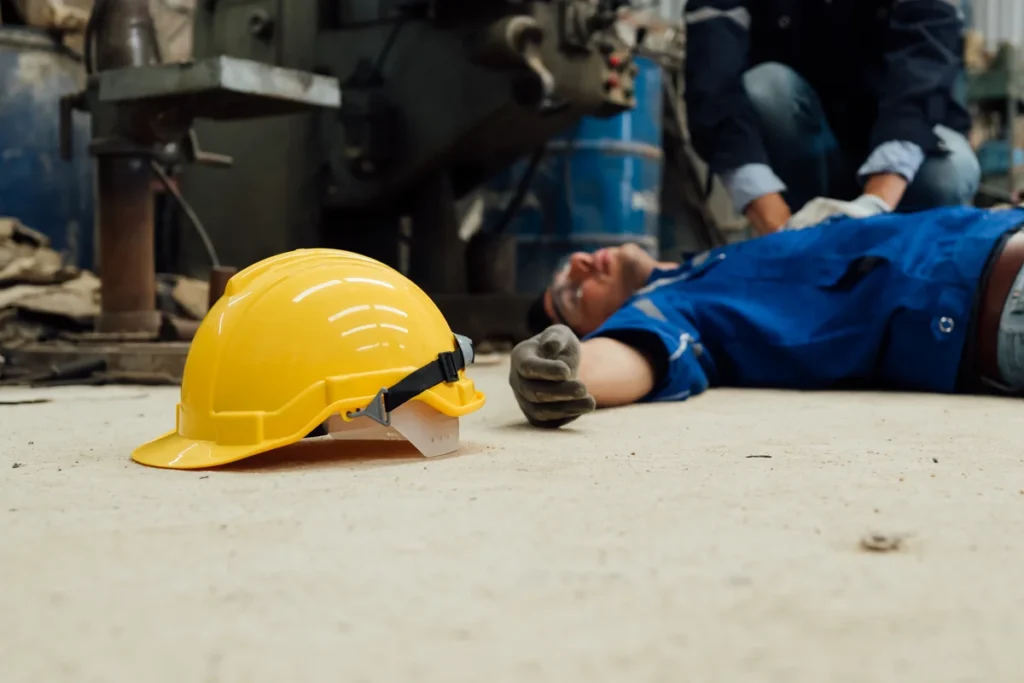
If you were injured on a job site, you may already suspect that safety rules were not being followed. Perhaps workers were not provided with proper fall protection, a scaffold shook, or necessary safety training was never provided.
Common OSHA violations include:
Fall protection failures
Scaffolding violations
Hazard communication failures
Machine guarding violations
Lockout/tagout failures
Respiratory protection issues
Training failures
Emergency action plan failures
Recordkeeping violations
These safety failures can lead to serious accidents, including falls, crush injuries, electrocutions, burns, and other catastrophic injuries.
While some violations directly contribute to workplace accidents, others, such as inadequate recordkeeping or deficient emergency action plans, can reveal broader workplace safety problems. In some cases, they may help demonstrate that an employer failed to maintain a safe workplace. Additionally, some violations may be used to help support claims for punitive damages.
What are Your Rights Under OSHA in New York?
Workers have important rights under Federal OSHA regulations, including the right to a safe workplace, safety training, information about workplace hazards, and protection from retaliation for reporting safety concerns.
These rights are designed to ensure that workers do not have to choose between their livelihood and safety.
Under OSHA, workers generally have the right to:
Work in a safe environment: Employers must provide a workplace free from recognized hazards.
Receive Safety training: Training should be provided in a manner and language that workers can understand.
Receive required safety equipment: Employers must provide necessary personal protective equipment (PPE) when required.
Know about workplace hazards: Workers have the right to information about chemicals, machinery, and other dangers.
Report hazardous conditions: Workers may file a complaint with OSHA.
Participate in inspections: Workers or their representatives may participate in portions of OSHA inspections.
Review certain records: Workers may be entitled to access injury logs and exposure records.
Be protected from retaliation: Employers generally may not punish workers for reporting safety concerns or exercising their OSHA rights.
Retaliation may include termination, demotion, reduced hours, threats, harassment, or other adverse action taken because you reported unsafe conditions.
What are Employers’ Responsibilities Under OSHA in New York?
Employers are responsible for complying with OSHA standards, providing a workplace free from recognized hazards, correcting known safety issues, providing required safety equipment, and ensuring workers receive appropriate safety training.
If you were injured on the job, you may wonder who was supposed to prevent the accident from happening. In many cases, the answer begins with the employer.
However, responsibility may extend beyond the employer. Depending on the circumstances, a general contractor, subcontractor, property owner, or equipment manufacturer may also have safety-related obligations. That is one reason workplace injury cases involving OSHA violations often require careful review by an experienced attorney.
Protecting Yourself from OSHA Violations at Work
You can help protect yourself from OSHA violations by staying alert, understanding your rights, following workplace safety procedures, and reporting hazards when you see them.
Here are some practical steps you can take:
Know safety procedures: Make sure that you understand how to perform your job safely. If you have any questions about equipment, training, or workplace hazards, ask before beginning work.
Wear protective gear: Always use the required PPE equipment (Personal Protective Equipment), such as hard hats, gloves, eye protection, and other safety gear.
Report unsafe conditions: If you identify a hazardous condition, notify your supervisor or employer promptly and request that the issue be addressed.
Document hazards: Keep records of unsafe conditions, including dates, times, and photographs when it is safe to do so. Documentation can be valuable if a safety issue later needs to be reported.
Promote workplace safety: Watch out for your coworkers and help reinforce safe work practices, especially when working with new or inexperienced employees.
Know how to contact OSHA: If your employer fails to address a serious safety concern, you may file a confidential complaint with OSHA.
Taking these precautions can help reduce the risk of workplace injuries and create a safer environment for everyone on the job.
How to Identify and Report OSHA Violations in New York
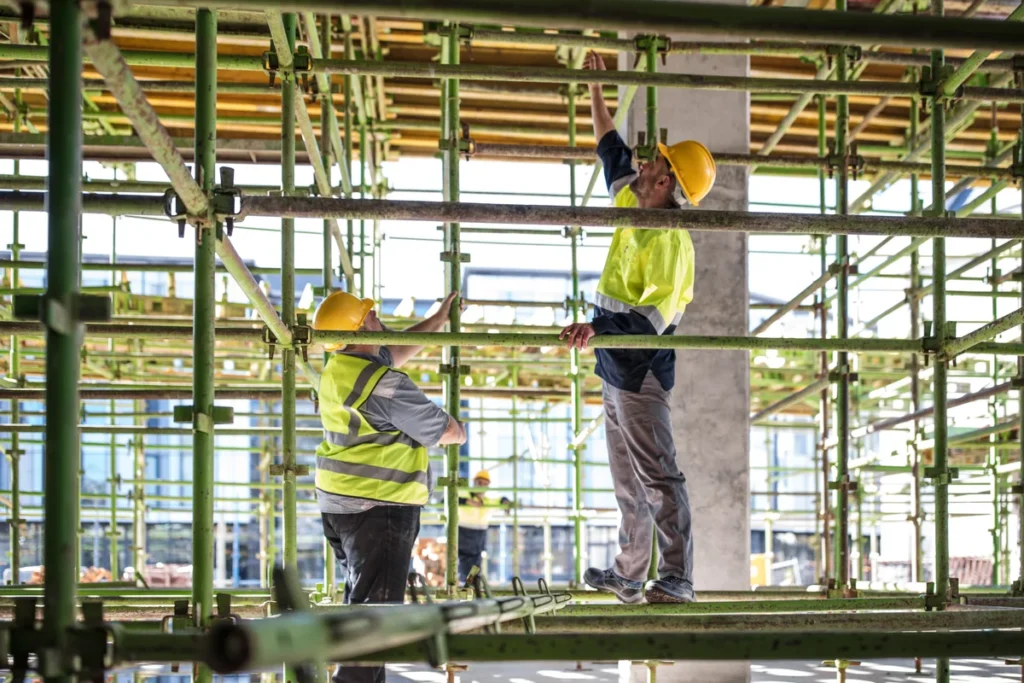
You can identify OSHA violations by recognizing working conditions, missing safety protections, inadequate training, or other workplace hazards. If you observe a potential violation, you can file an online report or by phone, letter, or other written complaint with OSHA.
Reporting a hazard can help prevent injuries and protect both you and your coworkers.
Here are the basic steps:
Document the hazard. Record the date, time, location, and details of the unsafe condition.
Take photographs when safe. Never put yourself at risk to gather evidence.
Preserve communications. Save relevant emails, text messages, work orders, or instructions related to the hazard.
Identify witnesses. Coworkers who observed the condition may be able to confirm what occurred.
File a complaint with OSHA. Complaints may be submitted online, by phone, by mail, or by fax.
Request confidentiality if desired. OSHA allows employees to ask that their identities remain confidential during the complaint process.
The most effective OSHA complaints are specific and well-documented. Providing detailed information helps OSHA evaluate the reported hazard and determine whether further investigation is warranted. So, it is best to get legal consultation to file a strong claim.
What are the Legal Options after an OSHA Violation in New York?
After an OSHA violation in New York, you may be entitled to workers’ compensation benefits or have the right to pursue a third-party personal injury claim. Depending on the facts, you may also have other legal remedies.
A workplace injury can leave you unable to work and worried about paying your bills. Fortunately, an on-the-job injury does not always limit you to a workers’ compensation claim alone. Here are some of your legal options:
Workers Compensation
Workers’ Compensation is often the first source of financial support after a workplace injury. It can cover medical expenses, a portion of last wages, and certain disability benefits, regardless of who was at fault.
Third-Party Personal Injury Claims
If someone other than your employer caused or contributed to the unsafe condition, you may have a claim against that party, such as:
General contractors
Subcontractors
Property owners
Equipment makers
Maintenance companies
Unlike workers’ compensation, these claims may allow recovery for pain and suffering, full lost earnings, future medical expenses, and other damages.
NY Labor Law Claims
Depending on the facts, NY Labor laws §§ 200, 240, and 241 may apply to your OSHA violations, depending on the facts.
Because these claims are highly fact-specific, an attorney should review the accident scene, contracts, equipment, and other evidence to determine which labor law applies.
If you need an OSHA violation injury lawyer in Brooklyn, Queens, or anywhere in New York, Cohen & Cohen Law Group can help.
How Can OSHA Violations Strengthen Your Case?
OSHA violations can help show that required safety rules were not followed. While a violation does not automatically prove your case, it may support claims of negligence or unsafe worksite conditions. Helpful evidence may include:
OSHA citations
Inspection reports
Witness testimony
Photos and video from the scene
Employer safety records
Previous offence history
Training logs or no training logs
For example, if a worker falls because no guardrails were installed, and OSHA later cites the site for fall protection violations, that citation may support a civil claim against the responsible parties.
At Cohen & Cohen Law Group, we look at how the violations connect to your injury, who controlled the worksite, and what evidence may support full compensation. We dig deep to look at how the violation connects to your injury, who had control over the work, and what evidence can support full compensation.
What are the Deadlines for Filing Claims after an OSHA Violation?
In New York, workers’ compensation claims, personal injury lawsuits, and retaliation complaints each have different filing deadlines. Missing one could affect your right to recover compensation.
Some of the most common deadlines include:
Workers’ compensation notice: Generally, you should notify your employer within 30 days of the injury and file a claim within 2 years.
Personal injury lawsuit: Most personal injury claims must be filed within 3 years of the injury.
Claims against public entities: A Notice of Claim is often required within 90 days.
OSHA retaliation claims: Filing deadlines vary depending on the type of retaliation claim and can be much shorter.
These deadlines can vary based on the facts. For example: claims involving occupational diseases, wrongful death, or government entities may be subject to different time limits.
An experienced attorney can identify the deadlines that apply to your case, preserve important evidence, and help protect your legal rights.

Common Workplace Accidents Caused by OSHA Violations in New York
OSHA violations can lead to falls, electrocutions, crush injuries, machinery accidents, toxic exposure, fires, and other serious workplace injuries.
Common accidents include:
Falls from heights: Roofs, ladders, scaffolds, and unprotected edges.
Scaffolding accidents: Collapses, slips, missing planks, or inadequate fall protection.
Electrocutions: Contact with live wires, improper grounding, or exposed electrical equipment.
Struck-by accidents: Falling tools, debris, or materials.
Caught-in or caught-between incidents: Workers caught in machinery, trenches, or between heavy objects.
Equipment failures: Defective or improperly maintained lifts, forklifts, saws, hoists, or power tools.
Vehicle accidents: Forklift wrecks, backing-over accidents, or loading dock mishaps
Toxic exposure: Chemicals, dust, fumes, asbestos, or solvents.
Fires and explosions: Often caused by fuel, gas, electrical hazards, or inadequate safety precautions.
These accidents can cause catastrophic injuries, including traumatic brain injuries, fractures, burns, spinal cord injuries, and amputations.
Choosing the Right New York OSHA Attorney
Choose an attorney with experience handling workplace injury claims, knowledge of OSHA and New York Labor Law, a proven record of results, and a commitment to clear communication.
Your attorneys should have:
Experience with workplace injury cases
OSHA and NY Labor Laws knowledge
A track record of results
Honest and open conversation
Client feedback and reviews
No-win, no-fee representation
Personal attention, not a case mill
Contact an Experienced New York OSHA Violations Attorney Near You

At Cohen & Cohen Personal Injury Lawyers, P.C., we offer free consultations, regular case updates, and experienced representation for injured New Yorkers.
You pay no upfront legal fees, and there are no attorney’s fees unless we recover compensation for you.
Call (718) 275-7779 today to schedule a free consultation with an experienced workplace injury attorney.
FAQs About New York OSHA Violations
Can I Sue My Employer for an OSHA Violation?
Usually not. In most cases, workers’ compensation is your exclusive remedy against your employer. However, you may have a claim against a third party, such as a contractor, property owner, or equipment manufacturer, whose negligence contributed to your injury.
What if a Contractor or Third Party caused the Violation?
You may have a third-party personal injury claim in addition to workers’ compensation. Unlike workers’ compensation, these claims may allow recovery for pain and suffering along with other forms of damages.
How Much Compensation Can I Recover for My Injuries?
Compensation depends on factors such as the severity of your injuries, lost income, medical expenses, future treatment needs, and the parties responsible. Every case is different.